About Svigel

Professor of Systematic and Historical Theology at Dallas Theological Seminary, author, husband, father.

Calvinist Confusion?

The September, 2006 cover of Christianity Today pictures a young adult in a tee shirt with an image of early American Congregationalist pastor, theologian, and evangelist, Jonathan Edwards. In a distinct, postmodern font, the shirt says, “Jonathan Edwards is my homeboy.” The cover of the magazine reads, “Young, Restless, Reformed. Calvinism is making a comeback—and shaking up the church.”

In my own life and ministry, I can confirm that Calvinism is making a comeback . . . as well as a renewed interest in theology and church history in general. The seeker-sensitive, mega-church trend of the 1970s, 80s, and 90s is, I believe, fading into its twilight. Younger generations of both believers and theologians are embracing an evangelical theology that taps into its historical roots and draws generously from the deep doctrinal wells of the community of faith—both past and present. The resurgence in Calvinism is part of this trend.

What, exactly, is Calvinism? What does it mean to be “Reformed”? Is it the same as Covenant theology? Is it a good thing or a bad thing? Does it matter?

The Road (Back) to the Reformation

When I was a high school student at a secular school, I learned only two things about John Calvin (1509–1564)—the father of Calvinist theology: 1) he believed people were predestined for hell, and 2) he burned Michael Servetus at the stake. When I became a Christian and attended Philadelphia College of Bible, I actually read Calvin (and Michael Servetus!) and I realized that he had been unfairly caricatured and demonized . . . even by Christians. And in one of my doctrine classes with Charles Ryrie I slowly became convinced of the key Calvinist doctrines. My own awakening into Calvinism was a gradual process of unlearning and relearning, coming to terms with what the Bible actually says (not what I wish it said) about issues like free will, sin and guilt, grace, faith, predestination, and all these major issues that distinguish Roman Catholic from Protestant theology. I began to believe that evangelical theology that rejected Calvinism was unwittingly stumbling into the murky swampland of medieval Roman Catholic salvation—the idea that we cooperate with God to be saved.

In the end, I embraced Calvinism as the best expression of the theology of the reformation and the most biblically-faithful explanation of the doctrine of salvation. So, in a large part, I am personally part of the resurgence of Calvinism that Christianity Today was describing. (But, no, Jonathan Edwards is not my homeboy.)

This often comes as a shock to those who, like me, were raised thinking that Calvinism violates free will, that it relieves Christians of the responsibility for missions, that it predestines people to hell, and that it requires you to believe in amillennialism, infant baptism, and allegorical interpretations of Scripture. None of these things are true, and foolish statements like these are best left unsaid. A professor at Philadelphia College of Bible convinced me that a person can hold to the Calvinist or “Reformed” doctrine of salvation while also embracing a Baptist view of the church and a premillennial, dispensational view of the end times. There have always been Calvinist Baptists, Calvinist Prebysterians, and Calvinist Congregationalists.

So, we need to realize that the recent upsurge in Calvinism is not a “take-over” by a hostile heresy or attack by dangerous doctrines. Both Dallas Seminary and my local church home, Scofield Memorial Church, have deep historical roots in American Calvinist theology. In fact, one could make a case that a rejection of Calvinism over the last several decades reflects a deviation from the original, rich theological soil of our Bible Church tradition.

Calvinism Clarified

So, what do Calvinists actually believe?

Through the centuries, Reformed theology has communicated its essential doctrines with five “points” summarized by the acrostic, “TULIP.” These are: Total depravity, Unconditional election, Limited atonement, Irresistible grace, and Perseverance of the saints.

Because of the fall, the human mind, emotions, and will are totally depraved—lost and unable to respond to God’s salvation without His quickening Spirit giving us the ability to believe (Romans 3:9–10; 8:7–8). If all human beings throughout history are lost and already condemned, and if God must act first to save anybody, then God must choose to save those who are saved (Acts 13:48; Romans 9; Ephesians 1:3–6). He thus elects those He will save unconditionally, not based on anything they have done or will do. Next, the controversial doctrine of limited atonement does not teach that Christ’s blood is insufficient to pay for all sins, but that in the purpose of God’s election, Christ died only for the eternal benefit of the Church (see Ephesians 5:25–27). Because God chose who will be saved, all of the elect will come to believe through the prayers and preaching of believers, and no non-elect will accidentally believe. God’s grace for those whose mind is illuminated is irresistible (John 6:44; 10:27; Acts 2:39; Romans 8:29–30). Finally, those that God elected, called, and saved by grace through faith can never lose their salvation. True saints will persevere in faith until the end and are therefore saved eternally (John 10:27–29; Romans 8:29–39; Ephesians 2:8–10).

This five-point doctrine of salvation represents the essence of “Calvinist” or “Reformed” theology. It also represents several distinguishing marks of Protestant versus Catholic views of salvation and taps into the roots of our own conservative, fundamentalist, and even dispensationalist heritage, regardless of the drifts and deviations of the past several generations.

Whether or not you agree with Reformed theology, in light of its recent revival and resurgence believers ought to at least be aware of what Calvinism really is—and is not. And, as always, we must consult the Scriptures before either embracing or dismissing current trends in theology.

Is Christianity Absurd?

In 1 Corinthians 1:22–23, Paul wrote, “For indeed Jews ask for signs, and Greeks search for wisdom; but we preach Christ crucified, to Jews a stumbling block, and to Gentiles foolishness.”

Let’s face it. The heart of Christianity really does sound rather absurd to well-educated minds. When a person steeped in the world’s wisdom steps back and takes an objective look at what we believe about Jesus Christ, Christianity comes out looking pretty foolish. Think about it. The eternal God becoming a human being? That makes as much sense as a man becoming a gnat . . . or a blade of grass . . . or a popsicle stick. Or what reasonable person would believe that the divine Source of all creation—of life itself—could die? And what modern person would ever believe that a dead man could come to life after three days?

The absurdity mounts to such a degree that one marvels that anybody believes at all . . . yet you and I stake our whole existence on such seemingly ridiculous claims! Why?

If you think the incarnation of the Son of God sounds absurd in 2006, try to imagine what it would have sounded like nearly 2000 years ago. Believe it or not, the situation was far worse in the early days of the faith. Imagine how you’d feel about your own flesh if we had access to only herbal remedies to treat diseases. Think about how you’d feel about your body if you had no deodorant, poor dental care, no eye glasses, no corrective surgery, and no way to treat mental illness or depression. Consider how you might view your body if you had no running water, no sewage system, and no toilet paper. If a loved one came down with a debilitating disease, you personally cared for him or her as that frail body and mind wasted away before your eyes. And when people died of accidents, injuries, or illnesses, you dealt with it up front and personal.

Today, we sanitize and sterilize almost all aspects of life . . . and death. But for most people living two thousand years ago, flesh was not their friend. That’s the same world in which the early Christians tried to convince everyday Jews and Gentiles that the holy and pure God took on grubby humanity—flesh, bones, blood, sweat, bodily functions, odors, accidents, and illnesses. You can almost hear the response: “You’re telling us God did what?”

It’s no wonder that over the centuries embarrassed “Christians” have tried to make the incarnational core of Christianity sound less offensive and more reasonable. Some early deviations from the norm sought to down-play Christ’s humanity or deny it altogether. Others rejected His true divinity to prevent God from mixing too intimately with the imperfect creation. Others separated the human Jesus from the heavenly Christ—two separate persons sharing space, like a spirit might possess a man.

More recently in historical critical studies, some have said Jesus didn’t literally rise from the dead on the third day, but “lived on” in the religious experience of the believing community—that the New Testament stories of the resurrection are just myths. In this way the “truth” of Christianity supposedly becomes more acceptable to modern minds. In response, we try to present the truth of the incarnation in language that makes more sense—adapting the message to human notions about what’s reasonable and what’s absurd. We sometimes believe that if we just make the gospel sound more reasonable, reasonable people will believe.

But perhaps we need to come to terms with the fact that the gospel message is absurd by the standard of the world’s wisdom.

Let me turn the tables on this. Unlike the ancient and modern skeptics who find Christianity too absurd to accept, couldn’t we just as easily believe the truth of Christianity not in spite of its absurdity, but because of it? If Jesus Christ was not God incarnate, and if He did not really rise from dead, this would mean the early disciples made up all these stories about Jesus. But why would anybody make up stories that would be difficult for both Jews and Greeks to accept? Why not fabricate more “user friendly” and less “kooky” tales? Tertullian, a Christian of the early third century, put it this way: “The Son of God died; it is by all means to be believed, because it is absurd. And He was buried and rose again; the fact is certain, because it is impossible” (Tertullian, On the Flesh of Christ 5.4).

Is the incarnation absurd? Yes! Is it impossible? Yes! But only a fool would fabricate philosophically-incorrect doctrines like the incarnation and the resurrection if the goal was to convert the world. Yet Paul said, “The foolishness of God is wiser than man’s wisdom” (1 Corinthians 1:25, NIV).

Tertullian was right. Nobody would make this stuff up.

Therefore, I believe.

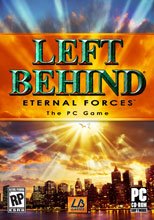
Left Behind Computer Game


From the Game Description at the official site.

· Lead the Tribulation Force from the book series , including Rayford, Chloe, Buck and Bruce against Nicolae Carpathia – the AntiChrist.

[NOTE: Of course, the Bible says in Revelation 13 that no one is able to make war against the Beast, and that he will be given authority to overpower the saints.]

· Conduct physical & spiritual warfare : using the power of prayer to strengthen your troops in combat and wield modern military weaponry throughout the game world.

[NOTE: Of course, believers will be martyred for their faith. They will not be fighting a holy war with physical weapons.]

· Recover ancient scriptures and witness spectacular Angelic and Demonic activity as a direct consequence of your choices.

[NOTE: Of course, there are no ancient scriptures to recover, and angelic and demonic activity is pretty much INVISIBLE.]

· Command your forces through intense battles across a breathtaking, authentic depiction of New York City .

[NOTE: See above.]

· Control more than 30 units types – from Prayer Warrior and Hellraiser to Spies, Special Forces and Battle Tanks!

[NOTE: This is ridiculous.]

· Enjoy a robust single player experience across dozens of New York City maps in Story Mode – fighting in China Town , SoHo , Uptown and more!

[NOTE: Ummm . . . where’s New York mentioned in the book of Revelation?]

· Play multiplayer games as Tribulation Force or the AntiChrist’s Global Community Peacekeepers with up to eight players via LAN or over the internet!

[NOTE: How Christian is it to actually pretend to control the Antichrist’s forces in a computer game?]

Comments, anyone?

Capturing and Caging Traditions

Many corners of the twenty-first century church are drawing on traditional modes of worship, including the use of incense, candles, sacraments, images, creeds, and liturgical prayers. In this respect they’ve sometimes been accused of a “return to Catholicism.” But for most, they have simply gotten fed up with the overly-intellectual worship of evangelicalism. To some believers of my generation, the rigid propositional truths and daunting dogmatism seem to have suppressed authentic spirituality, a vibrant relationship with God, and dynamic, loving relationships with other believers. So, they want a genuine Christian faith free from an oppressive Tradition, but incorporating a variety of “traditions.” This means drawing on non-propositional narratives and symbols that often have an ancient pedigree.

But this is extremely difficult to do well. And to date, I’ve not seen it rise above the level of mediocre.

I find the buffet-style traditionalism characteristic of many new churches to be a little, well, silly . . . or at least juvenile. I have nothing against incense and candles. But picking and choosing which “traditions” from two thousand years of church history to use in today’s worship seems a little ridiculous if we detach them from the history, culture, and theology in which they originally developed. Some things just don’t fit. If I bought a high-end piece of antique furniture from an estate sale and placed it in my living room, it would look silly. In the same way, I’ve seen evangelicals try to incorporate ancient rites and rituals into their worship in ways that make me cringe.

Labyrinths, prayers of the saints, stations of the cross, and other practices associated with Roman Catholicism or eastern catholic mysticism enjoy a new audience among some Christians seeking a different type of spiritual devotion—a deep, authentic, meaningful Christian experience. But I see very little sense of theological coherence, a clear notion of what is central, how these things fit together, the stories they try to tell. Let’s set aside the whole question of epistemology and propositional truth for a moment. When Christians try to weave together premodern practices like these, they often apply very modernistic anthropocentric criteria of individual preference. However, the new drive for community authenticity is not much different than the by-gone quest for personal certainty: in the end my personal reason or emotions reign.

The result of harvesting “traditions” from church history is not much more appealing to me than the old-style zoo that zoological societies have tried to replace over the last several decades. Remember when we used to rip God’s creatures from their natural habitats and cram them into rows and rows of jail cells for spectators to “enjoy.” In many ways today’s rip-off of ancient traditions is worse. Some have gone on a “Bring ’Em Back Alive” safari, snared a handful of appealing practices from the jungles of church history, killed them, and now display them in their two-year-old churches like disparate plush toys spread over a toddler’s bed.

I like tradition. I like it a lot.

But I don’t like watching people mishandle it.

Please stop.

Limited Atonement, 1 John 2:2, and Polycarp

There are a number of passages in the New Testament to which four-point Calvinists refer in debates against those who hold to the doctrine of “limited” or “particular” atonement (e.g., 2 Peter 2:1; 1 John 2:2; 1 Timothy 2:4–6; 4:10; Hebrews 2:9; and Acts 17:30). Indeed, the arguments on either side of the exegesis are not air tight. One of the most difficult passages for those who hold to limited atonement is 1 John 2:2, which says, “He Himself is the propitiation for our sins; and not for ours only, but also of the whole world.” The phrase “the whole world” later in 1 John 5:19 seems to refer to all people without exception—especially unbelievers. At the level of pure exegetical considerations—isolated and insulated from its historical and theological context—the passage seems, as Ryrie says, “to say rather clearly that the death of Christ was for the whole world” (Ryrie, Basic Theology, 321).

However, if we open our interpretation of 1 John 2:2 to the insights of the historical and theological context, the picture becomes, well, less clear than critics of limited atonement may think. The Martyrdom of Polycarp was written around AD 155 by Christians in Smyrna shortly after their bishop, Polycarp, was martyred in the stadium there. Polycarp, recall, was a personal disciple of the apostle John, and was—according to reliable tradition—one of many Asian pastors who had been ordained into pastoral ministry by John while he lived in Ephesus. In fact, if the “angels” of Revelation 2 and 3 refer to the pastors (or bishops) of those churches, as some commentators say, Polycarp may have been the “angel” of the church of Smyrna. Anyway, Polycarp is also one of the earliest witnesses we have of 1 John, as he seems to rely on 1 John 3:8 and 4:2–3 in his Letter to the Philippians 7. In short, Polycarp knew John’s writings and probably knew John himself.

With this historical background in mind, the statement of the Smyrnaeans in Martyrdom of Polycarp 17.2 is rather interesting as we consider the issue of 1 John 2:2 and debates between those who hold to limited atonement and those who do not. The Smyrnaeans wrote: “They [the pagans] did not know that we [Christians] will never be able either to abandon the Christ who suffered for the salvation of the whole world of those who are saved, the blameless on behalf of sinners, or to worship anyone else.”

So, the Smyrnaeans refer to the “whole world” with the exact language as the apostle John in reference not to all people everywhere, but to the world of the saved. That is to say, Christ is savior of the “catholic” church. He not only died for the sins of their own community in Asia Minor (as local deities or gods might be the “savior” of that particular community), but also for the sins of the whole world (as the universal savior of all believers throughout the world).

This passage in Martyrdom of Polycarp may amount to an indirect commentary or interpretation of 1 John 2:2. In fact, it could very well reflect the apostle John’s intended meaning of that passage. If the Smyrnaean authors of Martyrdom were reflecting Polycarp’s understanding of 1 John 2:2 (which to me is almost certain), Polycarp may have been relaying John’s original understanding of that phrase (which is possible), since Polycarp knew John.

A good friend of mine has pointed out that John Owen refers to this statement by the Smyrnaeans as patristic testimony for limited atonement in his Death of Death (Banner of Truth edition, page 310). Owen does not, however, elaborate on the implications of this statement by the Smyrnaeans with regard to their personal (and therefore theological) relationship to John through Polycarp.

Those who hold to limited atonement may feel that their own interpretation of 1 John 2:2 is strengthened by these historical considerations, since we might have a window (through Polycarp) into the apostle John’s own intention of the passage. However, those who reject limited atonement may still do so, even appealing to their own understanding of this and other passages. But to be fair, those who reject limited atonement can not claim that 1 John 2:2 is a clear proof text against that irritating third point of Calvinism.