
Twelve Myths of Church History Unraveled

YarnAs a theologian and church historian who teaches courses on all of church history and electives on the early and medieval church, I constantly encounter a number of falsehoods, fabrications, and exaggerations floating around in popular [Christian] culture. They’re preached from the pulpit, taught in classrooms, shared in Bible studies, and printed in books. (I’ve even heard them parroted by colleagues who should know better.) Each of the following twelve myths could be expanded into full-length essays and even books, but for the purposes in this essay, a quick, brief introduction and correction is all that’s necessary.           

1. The Substitutionary Atonement

Myth: Penal substitutionary atonement was first articulated either in the medieval period by Anselm of Canterbury or during the Reformation. The early church fathers held to the Christus Victor theory or some other non-penal substitutionary theory of the atonement.

Fact: Substitution—and even penal substitution—is one of several explanations of the atonement that go all the way back to the earliest centuries of the church. These various explanations were not mutually exclusive, but often held simultaneously with other explications by the same people. Numerous fathers and theologians of the early church and medieval period refer to Christ’s death as a sacrificial substitute, taking the penalty in place of sinners. The Reformation did emphasize and centralize the penal substitutionary explanation, but they did not invent it.

2. The Selection of the New Testament Canon

Myth: The early church fathers and ecumenical councils of the church selected the books of the New Testament canon based on strict criteria of antiquity (Is it old?), apostolicity (Is it written by an apostle?), orthodoxy (Does it teach the truth?), or other reasonable standards to determine whether each book belonged in the canon.

Fact: Though various local regional councils published lists of Old and New Testament books, no ecumenical council ever voted on the New Testament canon, and there is no record of church fathers or councils sorting through books to form a canon. The criteria such as antiquity, apostolicity, and orthodoxy were sometimes used to explain why certain books had always been received as canonical and why others were not, but they were never used as tests to determine canonicity.

3. Constantine’s Reinvented Christianity

Myth: Constantine’s Council of Nicaea in 325 forced the Church to decree that Jesus is fully God, after which this orthodox Trinitarian theology was enforced throughout the Empire as law. Before that the church had a vague view of Jesus or tolerated diverse views of who Jesus was.

Fact: Christians had consistently confessed Jesus as both God and Man since the first century. The Arians who taught that the Son was a created being were out of step with what the church had believed from the beginning. Constantine’s influence over the Council of Nicaea was relatively minimal and related to what technical language to use to best explain what the church meant by its confession of Jesus as God. Furthermore, the imperial powers after the Council of Nicaea (325) and before the Council of Constantinople (381) were often in official support of Arianism and against orthodoxy! In fact, for several decades the Emperors persecuted orthodox Trinitarians rather than supported them.

4. Salvation by Grace through Faith

Myth: Martin Luther was the first person to articulate the doctrine of salvation by grace through faith. Prior to that the church had long believed salvation was by faith and good works.

Fact: The doctrine of salvation by grace through faith has always been the view of orthodox Christians. The issue is whether the grace of salvation also produces works with faith . . . and whether the works produced by grace and faith result in salvation or are the result of salvation. Luther’s emphasis on salvation by grace through faith alone was centralized and emphasized more than any of his predecessors, but even prior to Luther other late medieval theologians expressed similar views.

5. The Early Church’s Self-Identity

Myth: The church of the first few centuries had a vague, undefined understanding of the difference between orthodoxy and heresy, and most church fathers would not be regarded as orthodox by today’s standards.

Fact: Christianity has always clearly and unambiguously held to certain central and foundational tenets summed up in early writings, hymns, confessions, and creeds. Though the earlier Christians tended to tolerate (or even celebrate) more diversity over non-central issues than the later medieval church, they had a clear and uncompromising view of the boundary between orthodoxy and heresy—much clearer, in fact, than many modern Christians.

6. The Inerrancy of Scripture

Myth: The doctrine of the complete inerrancy of Scripture is a recent development birthed in the Fundamentalist reaction against modernist liberal extremes in the nineteenth century. Prior to that, most church fathers and even Reformers allowed for a more dynamic view of Scripture’s truthfulness that allowed for errors by the human authors.

Fact: Though many had a dynamic understanding of the interpretation of Scripture that allowed for allegorical and symbolic meanings intended by the divine Author, no church father, medieval theologian, or mainline reformer ever corrected the assertions of Scripture in any matter. They believed in the complete inerrancy of Scripture and its absolute doctrinal and practical authority.

7. The Dark Gap of History

Myth: There is a dark historical gap between the writing of the New Testament in the first century and the rise of the Catholic Church, during which we know hardly anything about what early Christians believed and practiced.

Fact: There is no historical gap between the New Testament and the rest of church history. We have documentary and archaeological evidence from every generation from the first century forwards, leaving us with a good picture of what Christians believed and practiced. We always wish we had more information, of course, but there is no gap.

8. From the Sabbath to Sunday

Myth: The earliest Jewish Christians worshipped on the Sabbath (Saturday), but the Gentile Church changed the day of worship to Sunday.

Fact: Even the earliest Jewish disciples of Jesus during the apostolic period in the first century commemorated Christ’s resurrection every Sunday. Though most Jewish Christians also continued to observe the Sabbath, the first day of the week (Sunday) was the normal day of gathering for corporate worship because that was the day on which the Lord was raised.

9. From Simple Christ-followers to Dogmatic Christendom

Myth: The earliest church was simple, spontaneous, informal, and without liturgy and fixed leadership structures . . . but as the church grew it became more complex, rigid, formal, liturgical, and hierarchical.

Fact: From the first century onwards, local churches followed liturgies, recited doctrinal confessions, and submitted to ordained pastors and teachers. Worship was formal and solemn. Though the early church could not be accurately described as “informal,” compared to later centuries it was certainly “less formal.” And although the church was never without authoritative leaders, its hierarchy did become more and more complex. However, the earliest centuries enjoyed both fixed elements and flexible forms of worship from place to place.

10. Christianity without a Canon

Myth: There was a period of fifty to 150 years after the New Testament was written during which there was no functional New Testament canon; the church had to rely on oral tradition, confessional summaries, and church leaders for doctrinal authority until the New Testament took its authoritative place next to the Old Testament.

Fact: From the moment letter or book was written by a first century apostle (e.g., Paul) or prophet (e.g., Silvanus), it functioned as “canonical” within the Christian communities. There was never a time after the apostles during which the various churches were left without written authoritative New Testament writings. It is true, however, that there was a period of time during which many churches didn’t have a full New Testament canon with all twenty-seven books. Rather, they had between one and two dozens books functioning as the doctrinal and practical standard. By the year 150, however, most churches had a collection of perhaps two dozen New Testament books functioning with apostolic and prophetic authority.

11. The Apostasy of the Church

Myth: Shortly after the apostles, the church experienced a sudden departure or apostasy away from the pure faith of the New Testament. It took the Reformation to rediscover and retrieve the purity of the early church.

Fact: Though Christianity developed and changed over the centuries, the process was slow and gradual. There are actually ups and downs in the history of the church with regard to doctrinal fidelity, spiritual vitality, and moral integrity. Though different parts of the church apostatized, and different ages saw greater corruption and doctrinal infidelity, there have always been pockets of light and a remnant of faith and obedience throughout the history of the church.

12. The One True [Underground] Church

Myth: The true church founded by the apostles had to go “underground” shortly after the first century and especially during the Dark Ages in order to preserve the truth. They appear occasionally on the radar of history as “heretics” persecuted by the official Roman Catholic Church and mainline Protestant denominations.

Fact: There is just as much historical evidence that the one true church flew to Mars as there is evidence for a true church existing secretly throughout the centuries. When confronted with this lack of historical evidence, advocates of this myth say that the persecutors destroyed the evidence. Though a great plot for historical fiction writers, the idea of an unbroken line of independent churches outside either the Western and Eastern organized catholic churches is simply not true.

Is Cremation Really an Option for Christians?

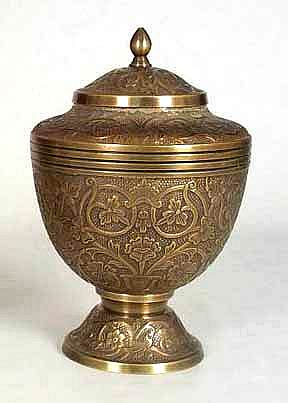
cremation-urn-2Cremation in North America has been on the rise for decades. In 1985 the percentage of deaths cremated was only 15%. In 1995 the number shot up to about 20%. By 2005 the percentage increased to just over 32%. By 2015 the projected figure is almost 45%, and in 2025, 55%.

For centuries, however, Christians have mostly rejected cremation as an acceptable treatment of the remains of loved ones. A biblical reason for this was that the patriarchs and prophets, priests and kings, princes and peasants, were buried in graves or tombs. Cremation was seen as a punishment or curse, not a common treatment of mortal remains (Gen. 38:24; Num. 11:1; Deut. 12:31; Josh. 7:25; 2 Kings 17:17; Ps. 106:18; Isa. 33:12). A theological reason for this was a belief in the bodily resurrection, in which what remained of mortal bodies would be raised anew, glorified, and transformed immortal, never to die again (John 6:28–29; 1 Cor. 15:52; Phil. 3:21; 1 Thess. 4:16). So the burning of remains was often associated with Eastern and Pagan religious traditions that viewed the physical body as an inferior, evil substance to be escaped or overcome rather than a part of God’s original good creation and a partaker in His future redemption.

Yet today many Christians are overcoming the traditional biblical and theological gag reflex associated with cremation by embracing it as a legitimate option. A number of factors contribute to this. First, cremation is significantly cheaper: cremation costs can be between 50% to 80% less than traditional burial, depending on the kinds of services involved! Second, many point out that both decomposition and combustion eventually lead to the same thing: dust and ashes. It’s just that one takes centuries, the other minutes. Third, some insist that cremation is more “green” . . . or at least it takes up less green space. And “green” is all the rage nowadays. Fourth, some Christians regard the body as just so much trash that needs to be discarded. And since some trash is buried and other trash is incinerated, why not do the same with bodies? After all, they reason, “The real me is in heaven with the Lord; I don’t care what happens to my rotten ol’ body.”

I’ll admit, the first reason seems, well, reasonable. Or at least fiscally responsible. The second reason is true: though the chemical processes are a bit different, the end result is more or less similar. The third reason makes sense in a part of the world where land is a premium and the potential for unsanitary burial is high. The final reason, though, is absolute rubbish. The view that the body is insignificant and irrelevant is not a Christian perspective. Period. (See my essay, “Don’t Walk on Those Graves!” for a biblical, theological, and historical explanation of the Christian doctrine of bodily resurrection.)

So, what do we do? On the one had we have traditional biblical and theological reasons to favor burial . . . on the other hand we have, well, let’s be honest—financial and pragmatic reasons (plus one quasi-heretical view of the physical body). It kind of seems pretty clear that the biblical and theological should outweigh the financial and pragmatic, doesn’t it?

Well, not so fast. The truth is, Jews and Christians buried their dead primarily as an act of their belief in the nature of the material body and its future in God’s redemptive plan. They did this explicitly in contrast to religions and cultures that viewed the body as useless trash or believed the body was just borrowed matter that should become one with the physical universe, just as our spirits would be absorbed into the mindless cosmic soul. Christians distinguished themselves in their belief that God will one day raise up the material bodies that had been animated by their immaterial souls, that those bodies originally created good would one day be restored and transformed into glorious bodies that would live forever in a renewed world free of death and corruption. By burying instead of burning, Christians aligned their actions with their beliefs—by their practice they confessed that God would one day win the victory over death through resurrection.

I believe Christians can continue to confess their belief in the resurrection of the body and practice cremation, because it’s not the form in which the mortal remains are preserved that is most important but that the mortal remains are preserved. Christians can distinguish themselves from pagan pantheism and materialistic atheistic by preserving the identity of the remains, whether they are buried or cremated. By maintaining the identity of the departed saint, we confess a belief in the future physical resurrection of his or her remains.

This leads to three practical points for those who choose cremation over burial.

First, avoid any actions that would confess a pantheistic “becoming one with the universe” theology. Scattering ashes in the wind, dumping them in the sea, fertilizing a lawn or garden, or otherwise mixing them with the world is an action that says, “Joe’s body is no longer Joe. It’s just dirt.” Wrong! Joe’s body is half of Joe! One day God will take Joe’s mortal remains, reconstitute and transform them, and reunite Joe’s soul with Joe’s glorified body! So scattering ashes is probably not a good picture of our belief in the bodily resurrection.

Second, maintain the identity of the remains. Yes, name them. Preserve them. Place them in a marked grave, or label them with a name plate—something that indicates that they are of significance and value both to you and to God. By doing so, you’re saying, “This is Jill. Yes, her spirit is with the Lord, but one day God will redeem Jill’s mortal remains, reversing the curse of death, and declaring victory over it forever.” Through our actions we will confess those final lines of the Apostles’ Creed: “I believe . . . in the resurrection of the body and the life everlasting.”

Finally, make your wishes—and especially the theological reasons for your wishes—clear to your loved ones. If you believe in the proper place of your physical body in God’s redemptive plan, make sure your loved ones know that you desire for your remains to continue to confess your faith in the gospel promise long after you’re gone. Don’t let your children or grandchildren dispose of your remains as if they were just emptying an ashtray!

Yes, I believe cremation is an option for Christians. God can and will raise up bones, dust, or even ashes on that Great Gettin’ Up Morning. But in the meantime, your desire to maintain the identity of your remains can communicate to others your belief that the darkness will one day give way to dawn, that the sun will break over the horizon, and you’ll answer Christ’s trumpet call to awake from your sleep.


“Don’t Walk on Those Graves!”: The Christian View of Resurrection

GraveOne day when my kids and I were visiting a historic family cemetery in Mesquite, Texas, my boys, Lucas and Nathan, were running to and fro over century-old graves. I called them to me and passed on to them the instruction that had been given to me as a little boy: “Don’t walk on those graves.”

Lucas looked puzzled. “Why not?”

Good question. In fact, I had never thought about it myself. “Because . . . er . . .” I fumbled for a reasonable answer. I couldn’t come up with one. Chances are I was just relaying some relic of superstition that my mother herself had received. But somehow I just couldn’t break the chain and say, Oh go ahead, then, walk all over those graves. Trample on them. It doesn’t matter. They’re deader than dead anyway.

Instead, I threw together the best ad hoc explanation I could come up with at such short notice: “Because,” I explained, “if the resurrection were to happen you’d get knocked over!”

It was true. At some point the graves themselves will burst open. Whatever remains of the dead that are still lying in the ground will be transformed and restored in a glorious new body that shares the characteristics of Jesus’ own glorious body. Nothing of the old will remain in the grave. All things would be made new. Yes, that decomposed matter lying under the ground has a future in God’s plan of redemption.

Sadly, far too many Christians believe their bodies are mere shells that contain the real “me,” as if God never intended for us to have a physical presence, a bodily existence, a permanent means of interacting with the creation He fashioned for us. However, the promise of bodily resurrection completely contradicts this notion. The belief in the redemption of our physical bodies has always been a central hope of the Christian faith (Rom. 8:23). When Christ returns, He “will transform our lowly body to be like his glorious body” (Phil. 3:21), no longer subject to mortality and death. Note, though, that this is a transformation of our present body, not a recreation of an entirely different body. Jesus did not leave his old body in the grave when He rose—instead, that old body was raised and transformed into the glorious body of His resurrection. Our transformation will follow the same pattern.

This has been the unbroken, unchanged teaching of the Christian faith since the beginning. In the second and third centuries Church Fathers like Irenaeus or Lyons, Athenagoras of Athens, and Tertullian of Carthage argued vigorously for a literal resurrection of the body against Greek scoffers on the one hand and “Christian” Gnostics on the others. The only people challenging the doctrine of the resurrection of our physical bodies as an essential truth were unbelievers and heretics!

Throughout the history of the church, the teaching of the future resurrection of our fleshly bodies continued to be articulated and defended. Consider the following quotations spanning the centuries:

Boethius, On the Catholic Faith (6th century): “This is a firm principle of our religion, to believe not only that men’s souls do not perish, but that their very bodies, which the coming of death had destroyed, recover their first state.”

John of Damascus, An Exact Exposition of the Orthodox Faith 4.27 (8th century): “We shall therefore rise again, our souls being once more united with our bodies, now made incorruptible and having put off corruption.”

Anselm of Canterbury, Why God Became Man (Cur Deus Homo), 2.3 (11th century): “If he had not sinned, man was to have been transformed into incorruptibility with the very body that he possessed. When he is restored, then, he must be restored with his own body in which he lives in this life.”

John Calvin, Institutes of the Christian Religion (16th century): “We must hold, as has already been observed, that the body in which we shall rise will be the same as at present in respect of substance, but that the quality will be different.” (John Calvin, Institutes of the Christian Religion, 1 vol. ed., trans. Henry Beveridge [Grand Rapids: Eerdmans, 1989], 2:271)

Jonathan Edwards The Final Judgment 4.2 (18th century): “However the parts of the bodies of many are divided and scattered; however many have been burnt, and their bodies have been turned to ashes and smoke, and driven to the four winds; however many have been eaten of wild beasts, of the fowls of heaven, and the fishes of the sea; however many have consumed away upon the face of the earth, and great part of their bodies have ascended in exhalations; yet the all-wise and all-powerful God can immediately bring every part to his part again.” (Jonathan Edwards, The Works of Jonathan Edwards, rev. ed., vol. 2 [Edinburgh: Banner of Truth Trust, 1974], 194)

In direct opposition to both the clear teaching of Scripture and the consistent teaching of every branch of the Church—Catholic, Orthodox, and Protestant—I too often hear people speak of “dying and going to heaven.” Or they speak of departed loved ones as “finally healed” from their maladies. Or they belittle the body as a mere shell, or a prison, or a burden. Or they believe God will simply discard their present fleshly bodies and replace them with a quasi-physical body either in heaven or at the return of Christ. In short, they essentially exchange the biblical, Christian doctrine of the resurrection of their flesh for the Greek Platonic or Gnostic belief that the physical body has no part in salvation and eternal life. But to reject the resurrection of the body is not simply to reject the unchanged teaching of the Christian church. Rejection of the bodily resurrection is a rejection of Christianity itself!

But why? Why would God bother restoring what has been laid to rest? Can’t He just create a completely new body out of nothing? Of course! However, by opening the graves and tombs and transforming our dead and decomposed bodies into glorious, incorruptible bodies, God declares once and for all: “O death, where is your victory” (1 Cor. 15:55). As Paul explained, “When the perishable puts on the imperishable, and the mortal puts on immortality, then shall come to pass the saying that is written: ‘Death is swallowed up in victory’” (1 Cor. 15:54). By snatching our mortal dust and ashes from the grave and transforming them into something eternal and glorious, God will demonstrate that Satan’s attempt at destroying humanity failed. Humans, who had been created with body and spirit in the image of God, will be not only rescued from death and restored to life, they will be crowned with glory and honor (Ps. 8:5).

So, next time you find yourself walking on somebody’s grave, watch out! You could end up getting knocked over if the resurrection happens!


[Adapted from the forthcoming Exploring Christian Theology: The Church, Spiritual Growth, and the End Times, ed. Nathan D. Holsteen and Michael J. Svigel (Minneapolis: Bethany House, 2014).]