
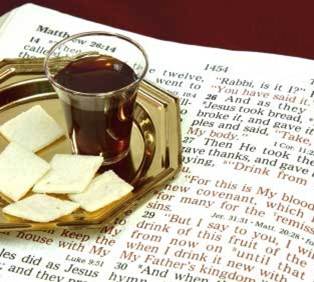
Should We Celebrate the Lord’s Supper Every Sunday in Church?

A monthly, quarterly, or simply “infrequent” observance of the Lord’s Supper (or in some traditions “the Eucharist,” “Communion,” or “the Lord’s Table”) has become generally accepted by many churches. So common is the non-weekly observance that when Bible-believing Christians are confronted with the fact that the earliest churches observed the Lord’s Supper weekly, as instituted by Christ and the apostles, they respond with disbelief, defensiveness, or even resentment. Countless excuses spill from their lips as to why they can’t (or won’t) conform their Sunday worship to the original apostolic model presented in the Bible and clearly seen in the earliest churches founded by the apostles.

Frankly, a lot of confusion, misinformation, bad preaching, and bad teaching have permeated our understanding of the Lord’s Supper. Therefore, it’s necessary to revisit the biblical, historical, and theological facts confirming that a weekly observance of the Lord’s Supper in the context of the local church’s Sunday worship was the original apostolic practice to be observed in all churches since—including yours and mine. I know this essay is long, and at points it can become somewhat technical. But I promise it will be worth your diligence.


Coming Together around the Bread and Cup

Let me begin by setting forth the simple establishment of the Communion service ordained by Christ at the completion of the Last Supper. Though the meal preceding its establishment was a typical Passover Seder, the institution of the bread and wine as the body and blood was a radical modification of the Passover tradition. Christ first “gave thanks” for both the cup and the bread (Matt. 26:26–27; Mark 14:22–23; Luke 22:17–19). The Greek verb “to give thanks” is eucharisteo, the noun form of which is eucharistia. This is the term used in the early church for the Communion service of bread and wine—the “thanksgiving” or Eucharistic observance.

Christ also identified the broken bread with his body and the cup of wine with his blood (Matt. 26:26–28). This is clearly a completely new revelation, not an expected part of the Jewish Passover observance. Therefore, Jesus’s words, “Do this in remembrance of me” (Luke 22:19; 1 Cor. 11:24) refers exclusively to the institution of the bread and wine. In fact, Paul himself narrows the observance to the consecrated bread and wine when he says, “For as often as you eat this bread and drink the cup, you proclaim the Lord’s death until he comes” (1 Cor. 11:26). That is, the proclamation, remembrance, and observance are all focused on the bread and wine, not the entire Passover meal.

Of course, neither Jesus nor Paul clearly said anything at this point about the frequency of the observance of the Communion service. Paul used the ambiguous term, “as often as” (1 Cor. 11:25–26). However, this term does not mean “do it whenever you want.” Clearly the Corinthian church already had a set pattern of observing the Lord’s Supper. Paul was therefore building upon that understanding of the frequency of the observance while reminding them that as frequently as they observe Communion, they are proclaiming the Lord’s death. The emphasis was on remembering the purpose of the observance every time they participate in it, not on observing the Lord’s Supper whenever they felt like it.

So, is there a way for us to determine what the apostles actually established as the normative practice of the Lord’s Supper?

In 1 Corinthians 11, Paul points out that when the Christians in Corinth “come together,” problems arise (11:17). Paul uses the term “come together,” sunerchomai, in this passage as a term for the official assembling of the local church in Corinth. In verse 18 he says, “When you come together as a church, I hear that there are divisions among you.” Also, 1 Cor. 14:26 uses the same term for the official gathered meeting of the church. This confirms that Paul had in mind the weekly gathering of the community to observe the practices he had established during his eighteen-month period of teaching the new Christians several years earlier. Though they had maintained the weekly practice of gathering together as a church, the meeting had become fraught with problems.

When did this gathering together of the church occur? Well, 1 Corinthians 16:1 says, “On the first day of every week, each of you is to put something aside and store it up.” The idea is that each believer is to contribute something of his or her wealth to a community pot that would later be collected when Paul arrived. The “first day of every week” is, of course, Sunday. The book of Acts also notes that the church of Troas gathered “on the first day of the week . . . to break bread” (Act 20:7). In fact, Paul stayed a full seven days in Troas after his arrival there in order to remain with the disciples during that Sunday. No other day would do.

In any case, the weekly gathering, having been firmly fixed in Judaism as Saturday, naturally continued in the early church, but with an important change. The earliest Christians commemorated the resurrection of Jesus, which occurred on “the first day,” Sunday (Matt 28:1; Mark 16:2; Luke 24:1; John 20:1). That this was the pattern established by the apostles themselves when they planted their churches is confirmed in the first century historical document from the church in Antioch, which instructs new churches, “Every Lord’s day, gather yourselves together, and break bread, and give thanksgiving after having confessed your transgressions” (Didache 14.1). So early is the Didache (dated by modern Didache scholars now between A.D. 50 and 70) that it gives us a window into the actual practice of the churches established by the apostles themselves. It’s not surprising that we find Ignatius of Antioch some years later faithfully carrying out the instructions of the apostles. He notes that those who have come to Christ from Judaism are “no longer observing the Sabbath, but living in the observance of the Lord’s day, on which also our life has sprung up again by Him and by His death” (Ignatius, Magnesians 9.1).

Therefore we see that our reading of the New Testament documents concerning Sunday worship (the Lord’s day, on which He was raised from the dead, not Saturday), is confirmed by the historical documents that relay the actual practices of the early church. (For more information on Sunday as the original day of Christian worship, see my essay, “Putting the Sabbath to Rest.”)

What were the churches expected to do when they “came together” (sunerchomai) each Sunday? Returning to 1 Corinthians, we see that in conjunction with the “coming together,” they were to celebrate the unity of the body by observing “the Lord’s supper” (1 Cor. 11:17–20)—a mark of unity at which they were utterly failing (11:21). That this “Lord’s supper” was not a fellowship meal is confirmed by the fact that Paul explicitly instructs those with means to “eat at home” (11:34; cf. 11:22). Rather, the “Lord’s supper” observed in the weekly coming together was that observance instituted by Christ “on the night when he was betrayed” (11:23).


Was the Lord’s Supper Just a Passover Meal?

Though some have closely tied the institution of the Lord’s Supper to the annual Jewish Passover meal, such a perspective fails to hold up to biblical, theological, and historical scrutiny. Already in 1 Corinthians Paul makes a point that “after supper” Jesus took the cup (1 Cor. 11:25). The Passover supper itself was over. What Jesus instituted came afterwards, was detached from the traditional Passover meal, and involved words and actions that were not part of any traditional Passover Seder. Renowned early church scholar, Everett Fergusson, writes of the account of the institution of the Lord’s Supper in the Gospels: “Mark and Matthew make nothing of the meal setting, except to mention it as the occasion when Jesus gave a special meaning to the bread and the cup. They focus attention on what was important for the continuing practice of the church” (“Lord’s Supper and Love Feast,” Christian Studies 21 [2005–2006]: 28).

Theologically, Christ uses the bread and the cup to point us to the New Covenant. In stark contrast, the Passover meal was an annual hallmark of the Old Covenant. In fact, in the key New Covenant passage in Jeremiah 31, the prophet proclaimed, “Behold, the days are coming, declares the LORD, when I will make a new covenant with the house of Israel and the house of Judah, not like the covenant that I made with their fathers on the day when I took them by the hand to bring them out of the land of Egypt” (Jer. 31:31–32 ESV). The mark of remembering the institution of the Old Covenant (redemption from Egypt) was the annual Passover celebration. The mark of remembering the institution of the New Covenant (redemption in Christ’s blood) is the weekly Lord’s Supper, remembering Christ’s incarnation, death, and resurrection each week as a reflection that Christ has not yet returned (1 Cor. 11:26).

Thus, the difference between Passover and the Lord’s Supper is as different as the Old Covenant and the New Covenant, as different as circumcision and baptism. This is why Paul put the Old Covenant Jewish observances in proper perspective in Colossians 2:16–17—“Therefore let no one pass judgment on you in questions of food and drink, or with regard to a festival or a new moon or a Sabbath. These are a shadow of the things to come, but the substance belongs to Christ” (ESV). These shadows of things to come (including the Passover, cf. 1 Cor. 5:7) must never be confused with the realities of Christ’s person and work—remembered through the weekly celebration of the bread and cup.


Was the Lord’s Supper the “Love Feast”?

The “love feast” is mentioned only once in the New Testament (Jude 1:12), paralleled in 2 Peter 2:13 with reference to a “feast.” Too often the “love feast” has been understood by modern readers as a “fellowship meal,” like a church potluck, Sunday school picnic, or some other time of “food, folks, and fun.” But the “love feast” held by many in the early church was actually a “charity meal” primarily for the purpose of providing sustenance for the needy members of the congregation—widows, orphans, and the poor. Its inspiration did not come from the Last Supper, but perhaps from the Lord’s miraculous feeding of the hungry in Matt. 14:19 and the early church’s practice of providing for the needy through the voluntary benevolence of the rich (Acts 4:34–35). In some places the love feast was supplemented with or supplanted by a monetary or food offering intended to provide for the poor and needy. On the other hand, the Lord’s Supper was an observance distinct from the love feast. In the Lord’s Supper, bread and wine were ceremonially consumed as a memorial confession of Christ’s person and work, a medium of spiritual fellowship with Christ himself, and a means of covenant renewal among the local church community.

Everett Fergusson writes, “The Lord’s supper and the love feast were two distinct activities—the one a remembrance and proclamation of the death and resurrection of Jesus and the other an act of benevolence and fellowship. It took some time before a distinct and fixed terminology prevailed, even as some time passed before the functions were separated in time, but the activities themselves had discreet meanings from the beginning” (Fergusson, “Lord’s Supper and Love Feast,” 35). Similarly, Marcel Metzger, an expert on the history of Christian worship, writes concerning the charity meals, “The community meals were at once a realization and an expression of charity and mutual support, another aspect of communion in one single body. In times of want and famine . . . the demands of mutual help led in all likelihood to the organization of daily meals for the benefit of the needy” (Marcel Metzger, History of the Liturgy: Three Major Stages, trans. Madeleine M. Beaumont [Collegeville, MN: Liturgical Press, 1997], 21–22).

Simply put, the “love feast” is not the same as the Lord’s Supper. Neither is the love feast simply a fellowship meal, like our modern potlucks, or any meal we have with other believers. Rather, when we read the Bible in its historical-theological context, it becomes clear that the “charity meal” was often observed in conjunction with the gathered community as a way for the well-off to provide for the needy. Thus, the modern equivalent of the “charity meal” in our churches is not the Lord’s Supper, a potluck, or a church-wide picnic, but a benevolence offering for the poor.


Was the Lord’s Supper Any “Breaking of Bread” with Believers?

Some time ago a young man contacted me with concerns over his church’s apparent teaching and practice of the Lord’s Supper. He reported that the pastor of the church taught that the biblical Lord’s Supper was never intended to hold a special place in church worship. Rather, the Lord’s Supper, he said, was any meal that believers enjoy together. In fact, that pastor boldly asserted that the traditional in-church observance of the Lord’s Supper was a “bastardization” of its original intent (these are his words, not mine!). And he added that he partook of the Lord’s Supper three times a day—whenever he “broke bread” with fellow believers at breakfast, lunch, or dinner!

Sadly, this confusion occurs far too frequently among careless Bible-readers who fail to read the Scriptures in their literary and historical context. The idiom “to break bread” is already used in the Old Testament. In Isaiah 58:7 and Jeremiah 16:7 the authors use the Hebrew word parash, “to divide,” in the sense of “sharing” food with the needy and the mourning. The Septuagint (the pre-Christian Greek translation of the Hebrew Scriptures) renders the idiom in Jeremiah 16:7 as “break bread.” By the New Testament, the practice of “breaking bread” in conjunction with a blessing at the beginning of a meal was customary in Judaism, often in the context of “dividing” one’s supply of food with others (Matt. 14:19; 15:36). Thus, when Jesus instituted Communion after the Last Supper, we are told that he “took bread, and after blessing it broke it.”

Everett Fergusson clarifies: “The phrase, ‘break bread,’ referring to a general custom, could refer to beginning a meal or to the specific remembrance of the death of Jesus. The context must decide which is meant in each case” (Fergusson, “Lord’s Supper and Love Feast,” 30). Many careless readers of Scripture (some who should know better!) have read the term “to break bread” as if a) it always means the Lord’s Supper, or b) it always means any meal with others, or c) it has both meanings, so it is a meal with others, which is the Lord’s Supper. This latter error—of which the pastor mentioned earlier was guilty—is akin to the exegetical fallacy D. A. Carson calls “Unwarranted adoption of an expanded semantic field” (Exegetical Fallacies, 2d ed. [Grand Rapids: Baker, 1996], 60–61).

The context of each passage must determine the kind of “breaking bread” involved. When Paul was on his way to Rome by ship and he broke bread with others on the vessel (Acts 27:35–36), this was a normal meal; it does not indicate that Paul shared the church’s Lord’s Supper with unbelievers as part of his evangelism! Earlier, in Acts 20, it appears we have both uses of “to break bread”—first as a reference to the Communion meal (Acts 20:7), then later as a common meal (20:11). So, when we see that believers “broke bread” with each other, we cannot automatically assume that the text necessarily means the church’s observance of the Lord’s Supper, Communion, or Eucharist—observed in the context of Sunday worship. Rather, it may be: a) any normal daily meal (Luke 24:30—like our breakfast, lunch, or dinner); b) a joyous fellowship or community meal with believers (Acts 2:47—like our potlucks or banquets); c) a charity meal for the benefit of the poor (Matt. 14:19—like our soup kitchens or charitable food banks); or d) the memorial bread and wine of the Lord’s Supper observed in church (1 Cor. 10:16—the same as our Communion).

The Lord’s Supper, one form of “breaking bread” with believers, was always meant to be an observance in the context of the worshiping church during their Sunday morning gathering (Acts 20:7). By confusing the various distinct uses of the phrase, “to break bread,” with its special use for the Lord’s Supper, some pastors and teachers have misinterpreted the observance of the Lord’s Supper as any every-day meal or as a special potluck meal. This has led some churches to eject the Lord’s Supper from their Sunday morning service altogether, reduce its frequency to special (i.e., “rare”) occasions, or to even offer it to unbelievers. Such practices don’t stand up to honest and informed biblical, theological, and historical scrutiny.


Weekly Observance in the Context of the Gathered Church

When we read the Bible in the historical context of the actual beliefs and practices of the earliest Christians, the conclusion is indisputable. All the churches throughout the world, in response to the institution of Christ and the authoritative instructions from His apostles, observed the bread and cup as the body and blood of Christ weekly as part of the Sunday morning worship when the church came together (1 Cor. 11:17–20). Do modern churches, therefore, have the right to alter this identifiable apostolic practice, taught in Scripture, observed in the earliest churches, and maintained for centuries as an immovable part of authentic weekly Sunday worship?

The apostle Paul instructed the Thessalonians to “stand firm and hold to the traditions that you were taught by us, either by our spoken word or by our letter” (2 Thess. 2:15). Paul expected the Corinthian Christians to “maintain the traditions even as I delivered them to you” (1 Cor. 11:2). Indeed, the teachings of the apostles are “the foundation” of the church, to which all later developments are to conform (1 Cor. 3:10). And we are to avoid and correct the errors of “human tradition” that inevitably creep into the church’s beliefs and practices (Col. 2:8). Judge, therefore, for yourself whether any teacher, preacher, pastor, or theologian has the authority to change the weekly Lord’s Supper observed in the context of the local gathered community. To do so seems to me to deviate from the clearly discernible tradition which Paul “received from the Lord” and “delivered” to the Corinthians—as well as all the churches he planted and in which he labored. This practice is not a mere worn-out tradition of men, but a hand-delivered practice from Christ and His apostles.

Not only did the ancient church take the apostles’ tradition regarding the Lord’s Supper seriously, but Protestant teachers also knew this to be the original teaching of the early church, too. The great reformer, John Calvin, wrote, “We ought always to provide that no meeting of the Church is held without the word, prayer, the dispensation of the Supper, and alms. We may gather from Paul that this was the order observed by the Corinthians, and it is certain that this was the practice many ages after” (Institutes of the Christian Religion, 4.17.44). The Roman Catholic Church had deteriorated in their practices to a point in which only priests partook of the Sacrament of the Mass daily, giving only the bread to their parishioners and that often only once a year! But by studying the Bible and the early church, the reformers knew this infrequent observance had no resemblance to authentic Christian worship. Instead, the weekly Sunday observance of the Lord’s Supper was intended to be a distinguishing mark of a biblically and historically faithful Protestant congregation.

Fergusson provides a balanced perspective with regard to proper observance of the Lord’s Supper as established by Christ and handed down by the apostles: “The association of the Lord’s supper with the Lord’s day and the association of the day of the resurrection with the day of meeting should not be weakened or broken by another practice. Nor should the significance of the Lord’s supper as a memorial of the death and resurrection of Jesus made by the gathered community of disciples be turned to other purposes. To make the Lord’s supper a sacrament that brings a blessing just by doing it [as in Roman Catholicism] says too much about the Lord’s supper. To treat it as a general religious act of personal piety so that it can be taken on other occasions than the assembly of the church [as in many evangelical churches] says too little about the Lord’s supper” (Fergusson, “Lord’s Supper and Love Feast,” 38).

How tragic that so many evangelical churches have drifted in their worship so far from the Bible, the practices of the earliest churches, and the ideals of the reformation!


Now for the “Yeah, Buts”

When confronted with the biblical, historical, and theological facts, Bible-believing Christians ought to amend their ways. They should conform their attitudes and actions to the commands of Christ, the mandates of the apostles, and the universal observances of the ancient churches. However, far too many evangelical pastors and teachers respond to these facts with all sorts of excuses for continuing to deviate from the apostolic practice. Over the years, I’ve heard them all. I present seven of the most common excuses, with my own brief responses in italics.

1) “If we observe the Lord’s Supper every week, it will become routine and mundane; a less frequent observance makes it more special.” Response: Then apply this same logic to the sermon, the collection, prayers, or singing. Would a monthly sermon make the message more meaningful? Would a quarterly praise and worship time make the songs more memorable? Would a monthly offering make every penny received that much more precious? On the positive side, I have heard countless testimonies from churches who have opted to obediently observe the Lord’s Supper weekly, saying they would never go back to a monthly or quarterly observance after experiencing the blessings of the weekly table.

2. “If we observe the Lord’s Supper every week, the worship service will be too long!” Response: So maybe you should shorten or cut out some of the activities you do during the worship service that aren’t actually apostolic. Or try re-appropriating time to better balance the elements of worship to include everything the apostles mandated. Most of our typical worship services can be divided at 50% preaching, 30% singing, and maybe 20% for everything else: prayer, offering, announcements, etc. Does this proportion reflect the Bible’s own emphases? Since the facts point to a weekly observance of the Lord’s Supper as an essential element of worship, shouldn’t we find a way to give it the space it deserves? Many other churches are able to do this. Why can’t yours?   

3. “Observing the Lord’s Supper every week looks too Catholic!” Response: The question shouldn’t be “How can I best avoid things that look Catholic?” but “How can we best conform to the things Christ and the apostles established?” It should be noted that Protestant reformers themselves—because of the compelling evidence of Scripture and early church practice—favored a weekly observance of the Lord’s Supper, not because it was Catholic, but because it was Christian. As pointed out above, in the medieval Roman Catholic Church, most people observed the Lord’s Supper rarely (usually only once a year!)  

4. “We can reflect on the person and work of Christ in other ways that are more culturally relevant than the Lord’s Supper.” Response: By what authority do you disobey Christ’s command? By what new revelation do you challenge the authority of the apostles? By what divine wisdom or insight do you place the Lord’s Supper in the category of “optional” observances? Jesus, through the apostles, established the Lord’s Supper as a unique practice that does more than just provide a means of reflecting on Christ. A close reading of 1 Corinthians 10–11 shows that with the observance comes spiritual blessing, a mark of unity in the body, fellowship with Jesus Christ through the Holy Spirit, and an act of covenant renewal before God and fellow believers. Also, the many evangelical churches that have restored a weekly observance of the Lord’s Supper to their worship have testified to its “relevance” as a weekly confession of faith that involves all five senses in a way that no other act of worship can. 

5. “Our church has done it quarterly (or monthly) for as long as I can remember. They won’t accept a weekly observance.” Response: Any church can be re-educated and shown the error of its ways. It may take time, study, skill, patience, and perseverance, but it has happened all around the nation. Numerous independent Bible churches, traditional Baptist churches, and other evangelical congregations that had long abandoned weekly observance have recently re-established this ancient practice and wouldn’t consider going back. No generation is immune from doctrinal and practical deterioration. Every church must frequently reevaluate and realign its beliefs and practices to the apostolic standard. A long history of disobedience is no excuse for a future of disobedience.

6. “My pastor [or professor] says you’re wrong. A weekly observance of the Lord’s Supper in the local church worship is not really what the Bible teaches.” Response: I’m sorry to say that your pastor [or professor] is simply reading the Bible outside of its actual historical context. I’m not alone in this. I personally know of no bona fide expert in the history of early Christian worship who would argue against my conclusions. (Oh, but I’m sure there’s one out there, somewhere!) I only know of ill-informed pastors or scholars who are non-experts in this field who argue that the original apostolic church didn’t observe the Lord’s Supper weekly. You see, we can actually look at the earliest churches that were established by the apostles and see that they clearly practiced the Lord’s Supper each Sunday in the gathered community. This isn’t a guessing game. It’s not a matter of some reading the Bible this way, others reading it that way. Being aware of the actual historical context, we will be equipped to read the New Testament descriptions and prescriptions in a clearer light. Sorry to say it, but your pastor or professor is reading into the New Testament what he or she wants to see in light of his or her modern church practices, personal preferences, or professional pride. They are not letting the Bible say what it said in its original first century context.

7. “Our church is too big to celebrate the Lord’s Supper each Sunday during the worship service. It’s a logistical nightmare!” Response: Somehow giant churches still manage to collect money every Sunday, and I’ve never heard anybody complain that it was a logistical nightmare! But even in churches with thousands in attendance, creative ways can be discovered to observe the Lord’s Supper weekly. Perhaps breaking into smaller groups throughout the facility after the sermon for the Communion component . . . or dismissing those who are not spiritually prepared during a brief intermission for preparation, then observing with those who remain . . . or working out a way to more rapidly distribute the elements to participants. Bottom line: if you value the Lord’s Supper as much as you value the collection of money, you can find a way to accommodate a church of thousands. (Also see my essay on problems with certain church ministry models that are not conducive to a weekly observance of the Lord’s Supper: “7 Church Ministry Models from Ideal to Awful.”)

Did the Apostles Establish the Office of Deaconess?

A man once asked a famous nineteenth century preacher to weigh in on a controversial doctrinal issue that has divided Christians for centuries: “What do you hold concerning water baptism?”

The preacher responded evasively: “My mouth.”

Another issue today evokes the same urge to keep our traps shut: the ordination of women to pastoral ministry. For some denominations this matter was settled generations ago either for or against. For others the issue flares up periodically, unable to be finally resolved. Frankly, in some circles it’s simply not prudent or polite to even discuss this topic, because whatever one might hold concerning the ordination of women will inevitably cross somebody’s strongly-held beliefs. This has led many to simply hold their mouths whenever the question comes up.

Too often, an honest, fair, and civil discussion becomes difficult. Misogynists (men who hate women) will universally seek to limit the role of women in ministry, but limiting the role of women isn’t necessarily misogyny. Similarly, feminists will universally seek to expand the role of women in church ministry, but expanding the role of women is not itself feminism. (“All A = B” does not imply “All B = A”) Yet all too frequently those engaged in the debate over the biblical, theological, and historical understanding of the roles of men and women in ministry can’t separate facts from emotions or analysis from implications.

The following essay doesn’t presume to settle the question of women in ministry, and we can’t promise not to stir up strongly held emotions from either side of the debate. However, we do seek to contribute modestly to the discussion by asking the question, “Did the apostles establish the office of deaconess?” We seek to answer this through both biblical and historical lines of argument, seeking to read the Scriptures in a way that’s faithful to the text but also consistent with the historical-theological context. That is, what do we know about the actual practices of the early churches established by the apostles, and how does this picture affect the historical context in which we should read the apostles’ writings? [For a more comprehensive application of this historical-theological approach to New Testament interpretation regarding important issues related to the church, see Michael J. Svigel, RetroChristianity: Reclaiming the Forgotten Faith (Crossway, 2012).]

The Language of “Deacons”

In order to address the question of the potential presence and particular role of deaconesses in the apostolic era (the time period of the apostles and their disciples), a couple of things need to be understood about the nature of a “deacon.” The Greek word itself, diakonos, has a fairly broad range of meaning, such as “a generic servant,” “a waiter of food,” “an agent with a special mission,” or “an official minister in a church.” In the New Testament diakonos can mean a servant with a certain mission or task (Rom. 15:8; 1 Cor. 3:5; Eph. 3:7); an assistant of a particular person (Matt. 22:13; 2 Cor. 6:4; Col. 1:7); or an official appointment, office, or position as a “minister” in a local church (Phil. 1:1; 1 Tim. 3:8–12).

Though all people were called to be diakonoi (servants), when Paul couples this title with the words for “elders” (presbyteroi) and “overseers” (episkopoi), he appears to use diakonos as an official title—a title that soon took on the sense of a distinct rank in church order (the diaconate) and still remains with us today in most ecclesiastical traditions as “deacons.” In fact, the present distinction between the general calling of all believers to serve and the specific “office” within church governance is so clear that the former are simply called “servers,” “helpers,” or “volunteers,” while the latter are called “deacons” or “ministers.” In Paul’s day the vocabulary itself was the same for both the general and the official: diakonos.

What does this technical discussion of the word “deacon” have to do with the issue of women holding ordained ministerial offices in the church? Well, in two New Testament passages it appears that the term diakonos in the official sense applies to women. In 1 Timothy 3:11 the context may include both men and women “deacons,” while Romans 16:1 refers to a specific woman, Phoebe, as a diakonos. Though these passages have been interpreted in different ways, we contend that when read in light of the early church’s actual practice of appointing deaconesses, the evidence for understanding these passages as referring to official “deaconesses” tips the balance away from alternative interpretations.

Phoebe—Servant, Assistant, or Minister (Romans 16:1)?

A greatly contested passage regarding the presence of official deaconesses in the apostolic age is Paul’s commendation of Phoebe (a woman) as a diakonos: “I commend to you our sister Phoebe, a servant (diakonos) of the church at Cenchreae, that you may welcome her in the Lord in a way worthy of the saints, and help her in whatever she may need from you, for she has been a patron of many and of myself as well” (Rom. 16:1–2, ESV). On this occasion, Phoebe had been appointed to a specific task—that of bearing the letter to Rome on Paul’s behalf. But does her designation as diakonos go beyond her task as Paul’s agent and messenger?

Interpreters who understand the term diakonos to mean a general “servant” from Cencreae rather than an official “deaconess” often argue that the term was ascribed to other individuals who were not regarded as filling the office of “deacon” in their churches, such as Paul (Eph. 3:7), Epaphras (Col. 1:7), Tychicus (Eph. 6:21), Apollos (1 Cor. 3:5–6), and even Timothy (1 Tim. 4:6). True, Paul could merely be placing Phoebe into the same general category of “helpful servant” as these other men, but this overlooks the two following important facts.

First, Paul describes Phoebe as a “diakonos of the church at Cenchreae,” specifying her function as diakonos to that specific church. This may seem insignificant until we realize that whenever the Greek phrase “________ of the church” is used in the New Testament and the earliest Christian literature (where “________” is a personal designation or title), the personal designation refers to an office, not just a generic function (Acts 20:17; Eph. 5:23; Jas. 5:14; Rev. 2:1, 8, 12, 18; 3:1, 7, 14; Ignatius, Trallians 2.3; Philadelphians 5.1; Polycarp 1.1; Shepherd of Hermas, Vision 2.2.6; 2.4.3; 3.9.7; Martyrdom of Polycarp 16.2; 19.2). Therefore, if Phoebe is merely a “helpful assistant” of the church at Cenchreae in Romans 16:1, this is the only time the construction is used this way in the earliest Christian literature.

Second, in Romans 16:2 Paul describes Phoebe as “a patron (prostatis) of many and of myself as well.” The word prostatis means “helper,” or “benefactor.” In this way Paul describes Phoebe’s general function as an assistant with a “servant’s heart.” If he generalizes her service to “many” in verse 2, it seems more likely that her particular function as “diakonos of the church” in verse 1 had a more specific and official sense. Verse 1 identifies Phoebe and her official office in her home church (a deaconess), while verse 2 describes her character as a general servant beyond her local church.

Of course, when we call Phoebe a “deaconess” we must recognize that the actual responsibilities and authority associated with titles like elder, pastor, teacher, and deacon in the early church were still in the formative stages. New Testament scholar Douglas Moo writes, “It is very likely that regular offices in local Christian churches were still in the process of being established, as people who regularly ministered in a certain way were gradually recognized officially by the congregation and given a regular title” (Moo, Epistle to the Romans, 914).

Even if Phoebe is called a diakonos in a quasi-official sense, the actual meaning of the term could still be floating somewhere between “servant-hearted helper” and “official church minister.” However, it may also be that the official recognition and designation of the office of “deaconess” began to develop early in the apostolic period. After all, the church had already been established for about twenty-five years, and several titled offices had been well-known in the churches from the beginning (Acts 1:20; 11:30; 14:23; Phil. 1:2).

Deaconesses or Wives (1 Timothy 3:11)?

The second passage we need to consider closely is the mention of the gynaikes (“women” or “wives”) in the context of the qualifications for deacons in 1 Timothy 3:11. Some understand the word to refer to the wives of the official deacons described in verses 8–10 and 12–13. That is, the men who fill the office of deacon should have “wives” (gynaikes) that are dignified, slanderer-free, sober-minded, and faithful (3:11).

It should be noted, however, that the word “their” often inserted in many English translations is not in the original Greek text. The Greek simply says, “gynaikes likewise.” It’s the same construction Paul used in verse 8 when he transitioned from the qualifications for elders to the qualifications for deacons: “Deacons likewise” (1 Tim. 3:8). This implies a “distinct, though similar, group” (I. Howard Marshall, The Pastoral Epistles, 493). Also, if Paul wanted to clearly refer to the wives of the deacons, he could easily have inserted the possessive pronoun to indicate this, saying “their wives” rather than the simple generic word for “women.”

Yet some might object that Paul immediately returns to the obviously male deacons in the next verses (12–13), where deacons are to be “the husband of one wife,” suggesting that verse 11 was simply an aside to describe the character of the deacons’ wives. However, it seems that if deacons’ wives were really in view, Paul would have inserted the parenthetical statement after actually mentioning the “one wife” of each deacon in verse 12. Instead, it seems most reasonable that Paul mentioned the “women” in verse 11 (that is, “female deacons”) before mentioning that the male deacons could have one wife in verse 12 in order to avoid the identification of the women in verse 11 with the wives of the deacons in verse 12.

Another problem with the “wives of deacons” interpretation of verse 11 is that Paul makes no mention of the character traits expected of the wives of overseers, though he clearly mentions they were permitted to have “one wife” (1 Tim. 3:2). So, are we to conclude that the character of deacons’ wives was more important and needed special mention? Were deacons’ wives more likely to be undignified slanderers? Paul doesn’t mention the ideal character qualities of elders’ wives in Titus 1:5–9, either, making us wonder why he suddenly mentioned the virtuous qualities of deacons’ wives in 1 Timothy 3:11. However, if we interpret this text as referring to qualities expected of the female deacons or “deaconesses,” then the problem resolves itself.

Of course, the evidence here is far from crystal clear. Coupled with Romans 16:1, the sudden appearance of the “women” in the midst of qualifications for deacons in 1 Timothy 3:11 seems to strengthen the possibility that the apostles had appointed both male and female deacons in the local churches. However, we must leave this possible reading of the biblical evidence and approach the question from another direction: the historical context of the early church.

Did the Apostles Leave the Early Church with Deaconesses?

Several historical arguments support the claim that deaconesses were, in fact, present and functioning in an official capacity in the early church—so early that it seems most reasonable that both men and women were among the original appointees to the general office of diakonos. In a section of an early Christian writing, Shepherd of Hermas (Vision 2.4.3), the leader of the church in Rome, Clement, is being commissioned to share the author’s message with those outside the city: “And you will write two books, and send one to Clement and one to Grapte. Clement will send it to the foreign cities, because it is permitted to him so to do, but Grapte will admonish the widows and orphans.” Early testimony informs us that a man named “Clement” was a prominent leader of the church of Rome in the late 90s—at the twilight of the apostolic era. One of his responsibilities at that time was to correspond with other churches. At the same time, Grapte (a female) was tasked with instructing “widows and orphans.” Later in the Shepherd of Hermas, we learn that looking after the widows was a responsibility given to the “deacons” (Similitude 9.26.2). Thus, at the very end of the apostolic period we have historical evidence of a female deacon, Grapte, functioning in an official capacity in a prominent church (Rome).

A second early testimony of the presence of deaconesses comes from a different region of the church: Asia Minor. Around 111 C.E. (a decade after the apostolic period), a Roman governor, Pliny the Younger, wrote a famous letter to the emperor Trajan (Lib. 10.96, Plinius Traiano Imperatori). In this letter Pliny consulted the emperor regarding the punishment of Christians, the beliefs and practices of whom Pliny had investigated. He learned details of Christian beliefs and worship by capturing and torturing two female Christians called ministra in Latin, a translation of the Greek “deaconess.” Thus, shortly after the end of the apostolic period we have additional historical evidence of female deacons in Asia Minor.

A third historical testimony relates to the practical need for women to assist the elders in the baptism of female converts to Christianity—filling a role parallel to male deacons for the baptism of men. In the daily ministries of the church, women were expected to minister to other women, especially when a home visit was required. This is attested in the third century Didascalia, which itself is based on earlier second century writings. That document urges “deaconesses” to minister to women in their homes, as it would be inappropriate for male deacons to do so (Didascalia 16). Likewise, both male deacons and female deaconesses were necessary for baptizing men and women in the early church, especially since they were baptized naked (Hippolytus, On the Apostolic Tradition 21.3, 5, 11). Thus, deaconesses would have been needed to assist in the baptism of women, just as male deacons assisted in the baptism of men. In short, the practical everyday needs of the Christian community strongly suggest that the early church would have required women ordained to a position in the church equal to that of deacons in order to minister to women in contexts that would have been impossible for men.

Finally, the transition from the apostolic period with both male prophets and prophetesses to the post-apostolic period leads to a strong possibility that just as temporary apostles were replaced by permanent elders (functioning as evangelists, pastors, or teachers), the prophets and prophetesses would naturally have been replaced by the deacons and deaconesses. Already during the New Testament period the church had women ministering in church as prophetesses (Acts 21:9; 1 Cor. 11:5). It may be that the temporary first century role of the prophet, which was an office in the church occupied by both men and women, was replaced by the office of deacons, occupied by both men and women. This would create a consistency in transitioning from the apostolic period to post-apostolic period, when apostles were replaced by the pastoring and teaching elders while the prophets and prophetesses were replaced by the ministering and serving deacons and deaconesses by the beginning of the second century.

Conclusion: Summary of the Arguments

Clearly, both Scripture and the ancient church point to an incontestable fact: women were heavily involved in the ministry of the church both local and catholic. Exactly when the function of recognized “servants” of the church—both male and female—began to be identified as an actual office of “deacon” or “minister” is not so clear. Though it’s possible that the office of deaconess was established from the very beginning, it’s also possible that this office grew into its own over the course of the apostolic period (A.D. 35–100).

Already in the 50s, Phoebe was singled out for her patronage. She had helped Paul on more than one occasion (Rom. 16:2) and most likely carried his letter to the Romans. Around A.D. 65, Paul described the necessary qualities for “women” in the context of qualification for deacons (1 Tim. 3:11). In Rome around A.D. 95 a woman named Grapte was told to minister to “widows and orphans” by teaching them—a task assigned to those in the deaconate. Around A.D 110 two women ministra (“ministers”/“deacons”) were described as suffering for their faith in Asia Minor. As the second century progresses, we see female deacons assisting the elders in the work of the ministry, teaching, caring for, and even assisting in the baptism of women and children.

What does this evidence suggest? It suggests that by the end of the apostolic age the ordained church office of “deaconess” was in existence, having developed throughout the apostolic period and therefore endorsed by apostolic authority. This is by no means a case that can be demonstrated beyond a reasonable doubt, but the available evidence seems to tip the balance toward the establishment of an office for “deaconesses” as a biblical office. Such an office would involve training, testing, and ordination to this particular appointment. It would also involve real authority and responsibility as deacons and deaconesses worked together in assisting the elders in the work of church ministry, granted the title of “ministers.” In short, a truly “conservative” approach to the role of women in ministry that seeks to base their churches on the most likely post-apostolic model would include not only male but also female ministers assisting the elders in the work of the ministry.

However, a few caveats are in order. First, although there appears to us to be substantial evidence in the New Testament and early church for the presence of deaconesses in the churches, there is no evidence for the presence of female elders or pastors. Therefore, a modern iteration of this post-apostolic order would be composed of male pastor-elders assisted in the ministry by both male and female ministers.

Second, the role of deaconesses appears to have been limited to the care of widows and orphans—women and children, but it seemed to have included their catechetical instruction, baptism, and discipleship—all under the oversight of the church elders. Similarly, the role of male deacons was also generally limited to the catechesis, baptism, and discipleship of men. Therefore, a modern iteration of this post-apostolic order would involve ordained women ministers primarily focused on the women’s and children’s ministry.

Third, early churches appear to have exercised some sensibility regarding the compatibility between a woman’s “stage of life” and her responsibilities for church ministry. Married women in child-rearing years do not appear to have been primary candidates as deaconesses, who tended to be older women—often widows—who in any case had enough time and energy to commit to full-time Christian service. Similarly, unmarried women (“virgins”) also engaged in official ministry as “deaconesses.”


[This essay was researched and co-written by Michael J. Svigel and Kymberli Cook. Originally posted at http://www.retrochristianity.org on April 14, 2012.]

Rise of the Anti-Church: Online Virtual “Church”

The trend toward online church “campuses” as a legitimate option to live church must come to an end. If a church has started an onine or “virtual” church campus as an alternative to an “in the flesh” gathering of a church community, it must desist. If an eager, entrepreneurial church planter is thinking about launching a virtual church, he needs to stop. If an impressionable saint thinks that he or she can satisfy the mandate to assemble together (Heb 10:25) by logging into an online worship service, he or she needs to think again.

Why?

Because, simply put, virtual church is anti-church.

Don’t misunderstand me. I’m not talking about authentic local churches that provide their messages online in order to provide an inspirational or educational resource to those in the congregation or around the world. I don’t even mean those churches that broadcast or stream their services live for shut-ins or others who aren’t able to make it occasionally to the worship service. I’m talking specifically about churches that “meet” exclusively online or those that have a part of their “membership” participating in the church exclusively online. I’m talking about online-only “campuses” promoted by churches as viable, authentic church experiences among other options in their church campus repertoire.

I know that for some church leaders reading this, it’s too late. They rushed in without thinking this thing through biblically and theologically. They were so used to using the newest ever-changing technology to deliver the never-changing message that they simply took the next logical step. Or they got swept up in the “keeping up with the St. Jones’s” rat race and had to provide the same services that competing big-box churches were providing. Whatever the case may be, some churches have swallowed the virtual church model and see nothing wrong with it. In fact, this article already has them fuming.

To a certain degree, those who have fallen into the pit of the online church aren’t entirely at fault. Before any evangelical could end up careening over the cliff into legitimizing an exclusively online church campus, his or her evangelical tradition had to have taken four wrong turns in its ecclesiology. Without these four turns—of which most modern evangelicals are at least partially guilty—no right-minded Christian would ever imagine granting validity to a “virtual church” ministry. These are the turns toward “sermo-centrism,” “anti-sacramentalism,” “fan-ification,” and “neo-docetism.”

To help think biblically, theologically, and historically about the disastrous rise of the online anti-church, we need to examine these four false turns more closely.

Sermo-centrism: Reducing Church to the Message

Sermo-centrism is an error of reducing the entire worship service to the sermon. That is, instead of placing the preached Word in its proper place as a vital element of a full-bodied worship experience, the sermon becomes the most important thing—toward which everything points, around which everything revolves, and before which everything bows. In fact, in a sermo-centric church service, everything else but the sermon is detachable, optional, and flexible.

However, a well-rounded biblical worship service could never be reduced to the sermon. In the apostolic church, weekly worship also included confession of sins to one another, corporate prayers, singing of hymns with and to one another, the public reading of Scripture, a message exhorting believers toward love and good works, an offering of food or money for the poor, and the observance of the Lord’s Supper as a rite of personal and corporate spiritual renewal. In fact, neither the New Testament nor the early church ever regarded the sermon as the exclusive center, climax, or purpose of the Sunday morning gathering of the church.

When the purposes of “gathering together” as a church are explicitly mentioned in the New Testament, they include the following: to exhibit unity of the community by properly observing the Lord’s Supper (1 Cor 11:17–21, 33–34); to exercise spiritual gifts for the edification of the whole body (1 Cor 14:23–26); to pray for urgent matters (Acts 4:34); to report ministry endeavors (Acts 14:27); to discuss controversial doctrinal and practical matters (Acts 15:6); to read apostolic writings (Acts 15:30); to break bread and provide instruction in the faith (Acts 20:7); to exercise church discipline for the purification of the local congregation (1 Cor 5:4); to encourage one another toward love and good works (Heb 10:25); to confess our sins to each other (Jas 5:16). With this brief sampling, we see that the purposes of the physically gathered community and its leaders went far beyond the Sunday morning worship hour, and even that time could not be characterized as centering on a sermon.

From a historical perspective, the turn toward sermo-centrism occurred sometime after the Protestant Reformation during the age of revivalism, between about 1700 and 1900. During this time, itinerant preachers—often acquiring celebrity status—traveled from place to place, sometimes country to country, drawing crowds with dynamic evangelistic messages. They preached their fiery sermons from stages to filled fields or packed auditoriums. Everything centered on this proclamation. This revivalistic emphasis on the sermon soon made its way into our churches, which began to model their morning messages on the revivalist pattern—a lot of music to stir up the crowd followed by a long message designed to elicit responses from the hearers’ minds, hearts, and wills.

When many churches took the sermo-centric turn, however, all the other vital biblical elements of the gathered church were first diminished, then neglected, and eventually ignored or rejected—corporate prayer, church discipline, corporate confession of sin and forgiveness, and especially the weekly observance of the Lord’s Supper. Today, the sermo-centric model of Sunday morning worship is virtually an unquestioned conviction of many evangelical churches. Our leaders and congregants simply lack the biblical and historical perspective to realize how far removed the sermo-centric model is from the worship experience established by the apostles and practiced by most Christians for centuries. (For an alternative to the Sermo-centric model, which I call the pulpit/altar-centered model, see chapter 10 of my RetroChristianity:Reclaiming the Forgotten Faith.)

By reducing the purpose of the gathered community to the delivery of the message, evangelicalism opened the door to delivering this core element of the church in ways that do not require the community to be physically gathered. Without the sermo-centric turn, the viability of online virtual church could not be entertained.

Anti-sacramentalism: Forsaking the Rites of Initiation and Renewal

When many evangelicals reduced the worship service to the sermon, they began to have trouble finding a proper place for the New Testament sacraments of baptism and the Lord’s Supper. As the church body was regarded more as an audience assembled to listen to a sermon, baptism began to lose its original meaning as the rite of solemn initiation into a covenanted community. If you review all the reasons for which the people of the church gathered in the New Testament, you’ll notice that they all emphasize a serious degree of corporate accountability and interpersonal fellowship. In a stage/auditorium mentality where bigger crowds in tighter seating simply meant more ears to hear the motivational message, the concept of covenant church membership lost significance. As a result, today many traditions simply do not emphasize the necessary role of baptism in the life of the church. When it is practiced, it’s often sporadic, tacked on informally before or after a Sunday morning service, or relegated to a special “baptismal” service detached from the real purpose of church: to rev up the audience for its keynote address.

The Lord’s Supper has suffered even more. There’s no question at all that the apostles and the early church observed the Lord’s Supper (or “communion” or “eucharist”) every week as an essential part of their corporate worship experience. It was a holy time of offering oneself as well as the gathered body as living sacrifices to God in humble consecration (Rom 12). The one bread not only represented, but tangibly manifested, the unity of the one body gathered to partake together (1 Cor 10:17). Members of the church were not merely gathered to hear the Word read and preached. They were called upon to come forward, having confessed the wrongs toward one another and toward God, bearing an offering of love for others, and consecrating themselves to live a life of righteousness in response to the Word read and preached. So when evangelicals neglected the biblical emphasis on personal and corporate renewal through weekly observance of the Lord’s Supper, they lost a real, tangible, sanctifying experience of the faith designed to strengthen both individuals and the church.   

Both of these biblical sacraments of the local church functioned not only as necessary means of covenant participation (baptism as initiation, communion as renewal) but also as means of exercising discipline and maintaining holiness in the community. At the time of their baptism, members of the church both confessed their saving faith in the Triune God and pledged their covenant commitment to live the Christian life in the accountability of the church community. Having made this pledge, believers in good standing continued to renew their pledge of living a Spirit-led life of repentance from wickedness and growth in righteousness by participating in the Lord’s Supper. Those who strayed from the path of righteousness were physically excluded from sharing in this holy meal, of which Christ Himself was the divine Host through the power of the Holy Spirit.

By forsaking the physical corporate rites of covenant initiation (baptism) and covenant renewal (the Lord’s Supper), or by replacing these biblical ordinances with less formal and less physical processes for church membership and re-dedication, evangelicalism opened the door a little farther for a virtual church model. Virtual churches cannot really baptize. They can’t really partake of the Lord’s Supper from one bread to represent the spiritual and physical unity of the one body. They can’t really exclude those under discipline from the Lord’s table or hold individual members of the body to their baptismal pledge of discipleship. So, without the anti-sacramental turn, the viability of online church could not have been entertained.

Fan-ification: Converting the Congregation into an Audience 

We have seen that the gathered church engaged in corporate prayer, confession of sins to one another, mutual edification through hymns, teaching, reading Scripture, providing for needs, exercising spiritual gifts, and partaking of the Lord’s Supper. If one were to express this kind of worship service in a diagram, it would take the form of a circle. As the members of the covenanted community focus together on the center of Jesus Christ’s person and work, they themselves manifested by their physical presence the gathered “body of Christ”—His physical corporate presence on earth.

However, especially in the twentieth century, the most influential, paradigm-setting, model churches could not be described as a circle, but as a pyramid. Atop this grand monument stands the celebrity preacher, the center and source of the entire operation. Oh, he points us to the Bible and to Jesus, but he does so in ways that necessarily keep our attention on the preacher himself. If he were to downplay his presence and shorten his message in order to re-instate the proper place of corporate prayer, observance of the sacraments, mutual encouragement and exhortation, reading of Scripture, and other less glamorous and less personality-driven activities of the church, the celebrity would necessarily lose his place in the limelight.

Let’s face it. The celebrity pastor has mostly displaced the table of the Lord’s Supper, which once focused the congregation on the incarnation of God the Son, His atoning death, His resurrection, and His abiding presence in the gathered community. Then the semi-biblical motivational messages, cleverly conceived and professionally performed, have turned the pulpit itself into a stage. The “service” is now a “production.” This production has become a brand. The church itself then becomes a franchise that can be packaged and distributed—marketed even. Branch campuses with piped-in productions eventually give way to streaming delivery of fast food spirituality that tastes sweet in the mouth as it sours the soul.

In the extreme form of this fake Christianity, the congregation is no longer defined as those covenanted members who gather frequently to commune with the Lord by communing with His corporate body on earth. Rather, the congregation has become a crowd of “fans” drawn to a brilliant preacher like dumb insects drawn to a shining light. And with the advent of live A/V feeds and online delivery methods, the growth of the fan base is almost limitless. With the fan-ification of the church, the congregation has become an audience focused on the latest evangelical luminary . . . or tuning in to hear from their gifted gospel-guru.

By converting the congregation into an audience, evangelicalism opened the door even farther to legitimizing the online church. Virtual church members are pure audiences, as their “participation” through online media is only observation. Even if the online watcher is prompted to pray, to sing, to eat a cracker and drink some juice, or to shout “Amen,” he or she is doing nothing more than what we all did when we answered Mr. Rogers’ questions or responded to kids’ shows like Blues Clues or Dora the Explorer. The difference is, the grown Christian should know better. So, without the fan-ification of the congregation, the idea of online church could never have gotten off the ground.

Neo-Docetism: Promoting a Non-Incarnational Church
Finally, evangelicalism has slipped deeper and deeper into ecclesiological docetism. Christological docetism was the early heresy that separated the real physical, bodily humanity of Christ from His real spiritual divinity, either rejecting or severely down-playing the physicality of Christ and exalting His status as a spiritual being. The result was that Jesus only “appeared” to be human and physically present.

When the church is understood biblically and theologically as the body of Christ, this language necessarily assumes an orthodox incarnational Christology—that Jesus is fully human, fully divine (not one or the other), embodied (not a ghost), physical (not a phantom), real (not apparent), among us (not remote). For the church to reflect this incarnational reality of Christ as a mysterious extension of His corporate body on earth, the church must be embodied, physical, real, locally gathered, in the flesh.

An authentic gathering of the body of Christ on earth must be able to describe its corporate life in incarnational terms like those of 1 John 1:1—“What we have heard, what we have seen with our eyes, what we have looked at and touched with our hands.” If I can merely hear and see the gathered body, but cannot touch and embrace its members, or feel, smell, and taste its sacraments, then it’s not an incarnational church but a docetic church. The word “docetism” means “appears to be” or “seems to be.” In fact, it’s the functional equivalent of the modern term “virtual,” which means “simulated,” or “opposite of real or physical.” The docetic heresy taught that Jesus Christ was only a “virtual” human. His humanity wasn’t real, wasn’t physical. He was “simulated” humanity. In the same vein, a docetic body of Christ would be a “virtual” church. Its corporate gathering wouldn’t be real, wouldn’t be physical. It would be “simulated” church. And just as virtual reality is 100% not real, virtual church is 100% not church.

In short, the docetic church is no more an acceptable alternative to an incarnational church than a docetic Christ is an acceptable alternative to the incarnate Christ. Just as the docetic Christ is an anti-Christ, the virtual church is an anti-church. 

Rise and Fall of the Anti-Church

“Can” does not imply “ought.” The ability to do something does not mean it should be done. After evangelicalism as a whole took four distinct bad turns in the last few centuries, a growing number of over-zealous individuals and churches have taken the wheel and have driven their ministries headlong over a cliff. This has resulted in the docetic belief that an online church is a legitimate substitute for a real gathered congregation.

Evangelicals who are dedicated to biblical, theological, and historical renewal of the church must resist this madness. Let me suggest three ways we can do this.  

First, stop promoting, supporting, and tolerating virtual churches or online-only campusus and those who are propagating them. Those who believe online churches can pass as real churches have by this very belief demonstrated that they are unqualified to shepherd a true incarnational church of Christ. They apparently do not have the biblical understanding, theological training, and historical perspective needed to lead the church out of its current crisis. They can only lead it faster toward its disintegration. Resist the temptation to start a virtual church or promote an online campus as a viable alternative to the gathering of the body. And run (don’t walk) from those who start them.

Second, retrace your steps and work at reversing the four bad turns that led to virtual church being regarded as even a plausible ministry move. Reverse the promotion of the non-incarnational church (neo-docetism), the conversion of the congregation into an audience (fan-ification), forsaking the rites of covenant initiation and renewal (anti-sacramentalism), and reducing church to the message (sermo-centrism). Each of these alone and all of them together have led to a number of ministry models that are serving to weaken, not strengthen, the already declining evangelical tradition.

Third, promote a full-bodied church ministry, aligned with biblical priorities, informed by historical realities, and strengthened by theological convictions. Don’t let pragmatism, peer-pressure, commercialism, popularity, numbers, and the bottom-line dictate your ministry models and methods. The modern technological gimmicks and games may appear to be bringing about success in your ministry, but this is only “virtual” success. In the end, anything short of an incarnational ecclesiology will lead your ministry to destruction.

For a biblically, theologically, historically, and practically viable antidote to these trends, consider working through my RetroChristianity: Reclaiming the Forgotten Faith.

[Originally published April 12, 2012 at www.retrochristianity.com]